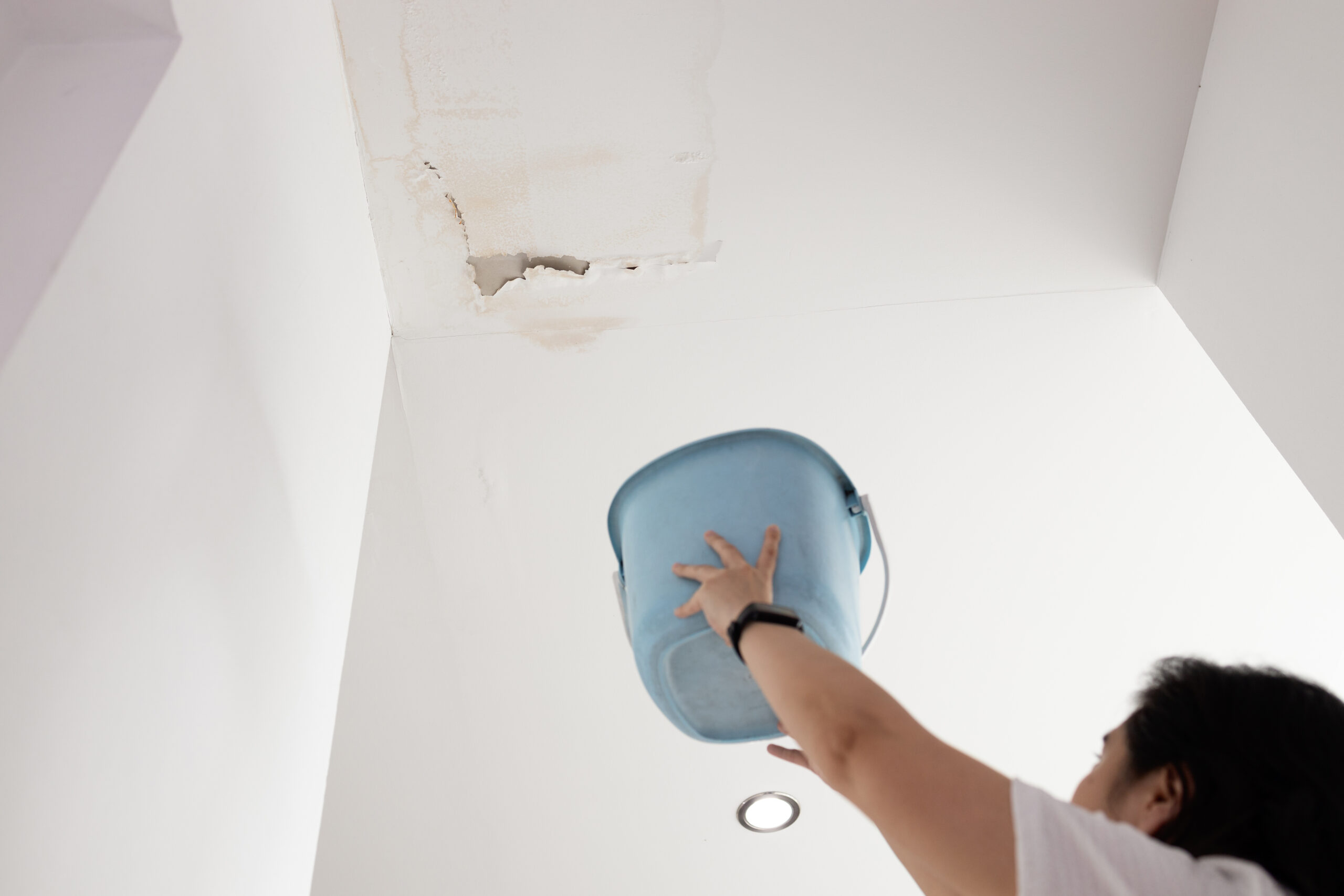
Discovering water dripping from your ceiling or a damp patch spreading across a wall can be worrying, especially during heavy rainfall. However, a leaking roof doesn’t automatically mean you need a complete replacement.
If you notice a roof leak, your first priority should be protecting yourself, containing the water where safe and limiting further damage to your property. Taking a few sensible precautions while arranging professional advice can help prevent the situation from becoming more serious.
In this guide, we’ll explain what to do when your roof starts leaking, how to recognise an emergency and why identifying the cause is essential for an effective repair.
What Should You Do Immediately If Your Roof Is Leaking?
If water is entering your home, move belongings away from the affected area, contain dripping water where safe and avoid touching wet electrical fittings. Once the immediate situation is under control, arrange a professional roof inspection to identify the source.
Follow these practical steps:
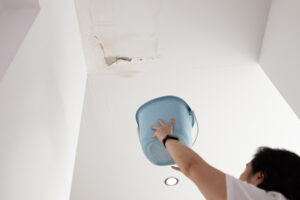
- Contain the water: Place a bucket or suitable container beneath the leak, provided the ceiling is stable and the area is safe. If water is spreading across the floor, use towels to limit further damage.
- Protect your belongings: Move furniture, electrical appliances, rugs and valuables away from the affected area. Avoid moving heavy objects beneath a visibly damaged ceiling.
- Check for electrical hazards: Keep away from wet switches, sockets and light fittings. If water is near electrical installations, seek advice from a qualified electrician. Only isolate the electricity if you can do so safely.
- Document the damage: Take photographs of visible leaks, ceiling stains and affected belongings. These may be useful when discussing repairs or making an insurance claim.
- Contact a roofing specialist: Arrange an assessment to identify where the water is entering and determine whether repairs are necessary.
Our expert advice: Don’t attempt to access your roof during heavy rain or strong winds. Even a relatively small leak can be difficult to locate without appropriate equipment and experience.
Why Is Water Leaking Through Your Ceiling?
Water appearing on your ceiling doesn’t always mean the roofing damage is directly above it. Rainwater can travel along roof timbers, beneath coverings or through insulation before becoming visible inside your home.
Common causes of roof leaks include:
- Cracked, missing or slipped roof tiles
- Loose or damaged slates
- Failed lead flashing around chimneys
- Cracks or deterioration in flat roof waterproofing
- Blocked gutters and drainage outlets
- Storm damage to roof coverings
The cause often depends on your roofing system. For example, a pitched roof may leak because of displaced tiles or damaged flashing, while an asphalt flat roof may develop a defect around an outlet, edge or roof junction. It’s also important to distinguish a roof leak from condensation or plumbing problems. Damp patches don’t always originate from the roof covering, particularly if they appear during dry weather.
Our expert advice: Identifying the original entry point matters more than simply repairing the area where water becomes visible indoors. For further guidance, read our article explaining the common causes of leaking roofs.
When Is A Leaking Roof An Emergency?
Not every roof leak is an immediate emergency. However, certain warning signs suggest the situation requires urgent professional attention.
These include:
- Water entering near electrical sockets or light fittings
- A ceiling bulging or sagging under trapped water
- Water entering rapidly during heavy rainfall
- Significant internal flooding
- Loose roofing materials creating a risk to people outside
- Visible structural movement or sections of roofing becoming unstable
A bulging ceiling may indicate water collecting above the plasterboard. Avoid standing beneath it, keep others away and arrange urgent professional assistance. Never attempt to puncture or disturb an unstable ceiling.
If water is affecting electrical fittings, avoid the area until it has been assessed by a qualified electrician. Where there is an immediate danger to life, contact the emergency services.
A small damp patch without active dripping may be less urgent, but it still requires investigation. Repeated moisture exposure can damage insulation, timber and internal finishes even when the original leak appears minor.
Can You Temporarily Stop A Roof Leak While Waiting For Repairs?
Although you should never attempt unsafe roof access, there are practical ways to limit water damage inside your home while waiting for professional assistance.
If the ceiling is stable and there are no electrical hazards, collecting dripping water in a container can help prevent it from spreading across the floor. Moving furniture and protecting nearby belongings can also reduce potential damage.
Avoid applying sealants to wet surfaces, attempting repairs from ladders or climbing into unsafe roof spaces. Temporary patches may fail to address the original defect and can sometimes make professional repairs more complicated.
If the leak stops when the rain ends, continue monitoring the affected area. A temporary improvement doesn’t mean the problem has resolved itself.
Our expert advice: Focus on protecting your property rather than attempting to repair the roof yourself. A roofer can assess the damage safely and recommend an appropriate solution.
Will A Leaking Roof Need Repairing Or Replacing?
A leaking roof doesn’t automatically require complete replacement. Many leaks result from localised defects that can be repaired without replacing the surrounding roofing materials. For example, an isolated slipped slate, cracked tile or damaged section of lead flashing may only require a targeted repair if the rest of the roof remains sound.
However, more extensive work may be necessary where:
- Multiple areas are leaking
- Roof coverings show widespread deterioration
- Previous repairs repeatedly fail
- The underlying roof deck or structure is damaged
- Waterproofing has deteriorated across a large area
The decision should be based on the condition of the complete roofing system, not simply the amount of water entering your home. A professional inspection can help establish whether repairing the affected section will provide a reliable solution or whether replacement would offer better long-term value.
For further advice, explore our guide to deciding between roof repair and replacement.
What Should You Expect During A Professional Roof Leak Inspection?
A roof leak inspection should focus on finding where water is entering rather than simply identifying the visible damp patch. Depending on the roofing material and accessibility, a roofer may examine the condition of tiles or slates, lead flashing, roof junctions, gutters and drainage outlets. On flat roofs, particular attention may be given to waterproofing details, edges and areas where water collects.
Previous repairs and signs of moisture damage may also help explain why the leak has developed. Once the likely cause has been identified, the roofer can explain the available repair options and whether any surrounding materials require attention. This approach helps avoid repeatedly patching the same area without resolving the underlying problem.
Frequently Asked Questions
Can A Roof Leak Stop On Its Own?
A leak may stop temporarily when rainfall ends, but this doesn’t mean the underlying defect has been resolved. Water may enter again during the next period of wet weather, so the cause should still be investigated.
Should I Contact My Home Insurance Provider?
If the leak has caused significant damage, check your insurance policy and contact your provider for guidance. Whether repairs or resulting damage are covered depends on the cause and your policy terms. Keep photographs and records of the affected areas.
How Quickly Should A Leaking Roof Be Repaired?
Active water ingress should be assessed as soon as possible, particularly where electrical hazards, ceiling damage or significant flooding are present. Smaller leaks also deserve prompt attention because repeated moisture exposure can cause further deterioration.
Can A Small Roof Leak Cause Serious Damage?
Yes. Even a minor leak can affect roof timbers, insulation and internal finishes if water continues entering over time. However, identifying the problem early may allow a relatively straightforward repair before more extensive damage develops.
Find Help For Your Leaking Roof
If you’ve discovered water entering your home, the most important steps are to protect the affected area, avoid unsafe repairs and arrange an assessment to identify the cause. A leaking roof doesn’t always mean extensive roofing work is necessary. In many cases, a targeted repair may be sufficient, provided the surrounding materials remain in good condition.
At Barringtons Asphalt Roofing & Build, we work with mastic asphalt, flat, slate and tile roofing systems, helping homeowners across Hornsey and North London understand their roofing problems and the most appropriate repair options.
Whether you’re experiencing an active leak or recurring water stains, we’re happy to discuss your concerns and help you understand the next steps. If you’re concerned about water entering your property, contact our roofing team for practical advice and to request a free quote.